

More on The Outsiders
I’m happy to have a short essay co-written with a former student over at The Drunken Odyssey. Sometimes resolutions take a decade. Continue reading More on The Outsiders
I’m happy to have a short essay co-written with a former student over at The Drunken Odyssey. Sometimes resolutions take a decade. Continue reading More on The Outsiders
Known by Salt: Tina Mozelle BrazielA fantastic debut by an Alabama writer. I won’t say much here as I’m in the process of getting my thoughts in order for an interview with the author. She’s really busy these days. If you like poetry of place, then I think you’ll like this book. It’s about growing up, … Continue reading A Kiss Risks a Prince: Recent Reading
In one of the Shakespeare courses I took, we discussed The Great Chain of Being, a hierarchical organization of all life and matter that started with God at the top and went down through social classes to minerals. In many of the plays, particularly the tragedies, a disturbance to the order of things–which must be … Continue reading Cannot be ill, cannot be good: Bad Omens in Plutarch and Shakespeare
With my current job I travel more than I ever have. One way I stave off homesickness is by reading books my wife has given me (and rereading poems we’ve written for each other). The one I keep picking up for now is Letters to Véra, Vladimir Nabokov’s letters to Véra Slonim from their first … Continue reading Good night. The day seems to be breaking. The sky is green.–Friday Love Letters
In the ancient world, being a fierce warrior wasn’t enough. Nicias was known as a strong soldier, but a careful general, which was not smiled upon at the time. In fact, it earned him scorn. Aristophanes, who also famously lampooned Socrates, made him a verb. It’s awkwardly translated sometimes as “shilly-shally-niciasize” and more simply as … Continue reading Verbing Nicias and Other Sundry from Plutarch’s Lives
I wrote earlier about Sertorius and his white fawn. Another aspect of Plutarch’s Sertorius that I find striking is the introduction that has correspondences to both Jung’s synchronicity and Freud’s uncanny. With Jung’s notion we get meaningful coincidence and pattern detection which are here in Plutarch’s opening. With Freud’s uncanny, we get doubling and doppelgängers, … Continue reading The Land of One-Eyed Men: More of Plutarch’s Life of Sertorius
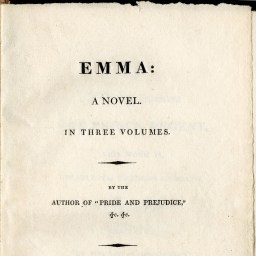
Pride and Prejudice has been a favorite novel since college. I found it a difficult, rewarding book. I found the prose difficult initially, but I kept reading because I enjoyed the Bennetts so much. I read Pride and Prejudice at least four times before it dawned on me that I should read Austen’s other novels. … Continue reading Omit Heedless Words: The Elements of Style According to Emma Woodhouse
I’ve mentioned my current long-term reading project is Plutarch’s Parallel Lives and how enjoyable the passages on Archimedes were. Another favorite sequence is on Quintus Sertorius. If you’ve read Shakespeare’s Julius Caesar, then you’ve already got an idea of what kind of guy Sertorius was: a statesman, a member of the nobility, and a general. … Continue reading The Shilling of a Sacred Deer: Plutarch’s Sertorius and The White Fawn
You can follow Emma on Twitter and at A Century of Nerve, and why not check out her new book House Is an Enigma, as well. It’s fantastic. Originally published at Eunoia Solstice in 2017. It’s been a privilege to read Emma Bolden’s work for a decade now and a pleasure to be continually surprised by it. On … Continue reading From the Eunoia Archives: An Interview with Writer Emma Bolden



 Stephen McClurg