Cannot be ill, cannot be good: Bad Omens in Plutarch and Shakespeare

In one of the Shakespeare courses I took, we discussed The Great Chain of Being, a hierarchical organization of all life and matter that started with God at the top and went down through social classes to minerals. In many of the plays, particularly the tragedies, a disturbance to the order of things–which must be … Continue reading Cannot be ill, cannot be good: Bad Omens in Plutarch and Shakespeare

Verbing Nicias and Other Sundry from Plutarch’s Lives

In the ancient world, being a fierce warrior wasn’t enough. Nicias was known as a strong soldier, but a careful general, which was not smiled upon at the time. In fact, it earned him scorn. Aristophanes, who also famously lampooned Socrates, made him a verb. It’s awkwardly translated sometimes as “shilly-shally-niciasize” and more simply as … Continue reading Verbing Nicias and Other Sundry from Plutarch’s Lives

The Land of One-Eyed Men: More of Plutarch’s Life of Sertorius

I wrote earlier about Sertorius and his white fawn. Another aspect of Plutarch’s Sertorius that I find striking is the introduction that has correspondences to both Jung’s synchronicity and Freud’s uncanny. With Jung’s notion we get meaningful coincidence and pattern detection which are here in Plutarch’s opening. With Freud’s uncanny, we get doubling and doppelgängers, … Continue reading The Land of One-Eyed Men: More of Plutarch’s Life of Sertorius

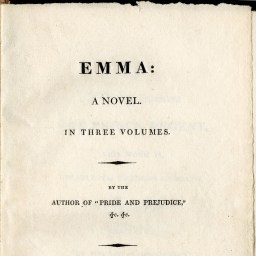
Omit Heedless Words: The Elements of Style According to Emma Woodhouse

Pride and Prejudice has been a favorite novel since college. I found it a difficult, rewarding book. I found the prose difficult initially, but I kept reading because I enjoyed the Bennetts so much. I read Pride and Prejudice at least four times before it dawned on me that I should read Austen’s other novels. … Continue reading Omit Heedless Words: The Elements of Style According to Emma Woodhouse

The Shilling of a Sacred Deer: Plutarch’s Sertorius and The White Fawn

I’ve mentioned my current long-term reading project is Plutarch’s Parallel Lives and how enjoyable the passages on Archimedes were. Another favorite sequence is on Quintus Sertorius. If you’ve read Shakespeare’s Julius Caesar, then you’ve already got an idea of what kind of guy Sertorius was: a statesman, a member of the nobility, and a general. … Continue reading The Shilling of a Sacred Deer: Plutarch’s Sertorius and The White Fawn

The worms crawl in, the worms crawl out: Scary Stories to Tell in the Dark

Scary Stories Treasury: Alvin Schwartz, illustrated by Stephen GammellI missed this collection of revamped urban legends and folk myths when I was a kid. I went from Godzilla in kindergarten, to the TV edit of Jaws in first grade, to Stephen King books and adaptations by second. I can only guess, but I figure my … Continue reading The worms crawl in, the worms crawl out: Scary Stories to Tell in the Dark

It isn’t a glamorous thing to do, but you have to do it: Recent Reading

Dead Blondes and Bad Mothers: Monstrosity, Patriarchy, and the Fear of Female Power: Sady Doyle I gulped this down in one sitting, so I’ll have to come back to it in order to write more substantially about it. It hits many of my areas of interest: Gothic literature, monsters, mythology, horror movies (the title is … Continue reading It isn’t a glamorous thing to do, but you have to do it: Recent Reading

Even if you knew the language you wouldn’t recognize the book: Italo Calvino’s post-compositional diagram for If on a winter’s night a traveler

I had wanted to start reading Italo Calvino, but wasn’t sure where to start. I found out that my wife had Invisible Cities, so I jumped in there. Cities easily won me over. Soon after everyone was telling me to read If on a winter’s night a traveler. I checked it out from the library, … Continue reading Even if you knew the language you wouldn’t recognize the book: Italo Calvino’s post-compositional diagram for If on a winter’s night a traveler